Welcome to the Biggs' Wildlife Ponds
[Looking for Southwest Odonata or California Odonata ? Click on name]
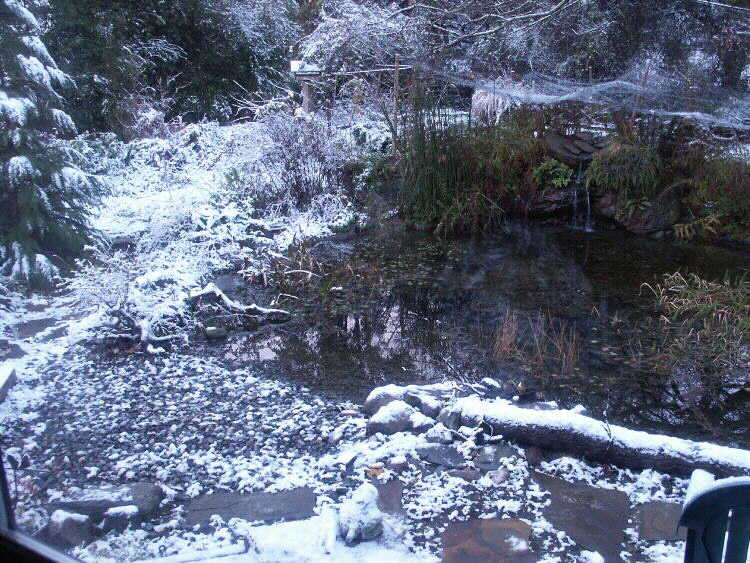
Learn about our wildlife pond in Sebastopol, CA and our off-the-grid pond in McCloud, CA
in its 8th year, April 2004 |
in its 8th year, April 2014 |
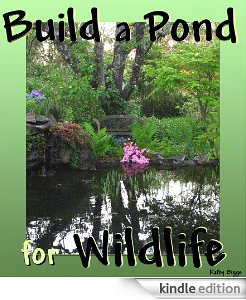
We've built our pond in our Sebastopol,
California backyard, in the hole that was left when we took down our above
ground pool (the deep end was dug in). We've used almost all native plants.
A lot of the fun in building this pond has been finding the plants, identifying
them, and just seeing what will survive and what won't. We've also collected
our own rocks. One of our biggest joys is seeing all the `critters' our pond supports,
especially the dragonflies!
We encourage everyone to consider putting in a pond for wildlife.
It is a
real joy.
Watch an HOUR long Presentation that Kathy gave in 2013 to the Saratoga CNPS club on
Building Ponds for Wildlife
on YouTube: YouTube Presentation
We had a gorgeous mantled Black Bear come swim/bathe in our Mt. Shasta pond.
We put a one minute video up of his visit on YouTube: http://www.youtube.com/watch?v=kz4Rs6dTRFc&feature=youtu.be
POND PROGRAMS:
I give programs on building ponds for wildlife and also on dragonflies.
Click here to go to a page
that lists them: POND &
DRAGONFLY PROGRMS Contact Kathy Biggs for
more information on any of these programs.
This site is 100% privately maintained.
If you've found it helpful,
a donation to help keep it on the web would be appreciated,
thanks! K. Biggs
Use this link to share this site on Facebook
Share
Below are links to the CA & SW Dragonflies websites I've built & also links
that go to my books, INCLUDING OUR NEW COLORING BOOK and some other books that we now sell:
This will take you to our
California Dragonflies Site with links to pictures for identifying all of California's
damselflies and dragonflies and
this link will take you to our
Southwest Dragonflies Site with links to pictures for identifying all the
damselflies and dragonflies that are known to occur in California, Nevada, Utah,
Colorado, Arizona and New Mexico.
A Coloring book that teaches about dragonflies and damselflies
Dragonflies of North America, A Color and Learn Book with Activities
2007
Click here for more information
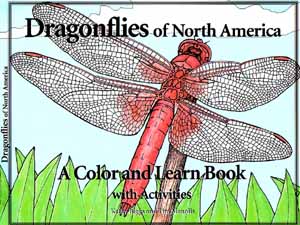
or
both by Kathy Biggs and Tim Manolis
Azalea Creek Publishing
NEW - 2024
Our revised, updated and expanded dragonfly guide for California:
Dragonflies (Anisoptera) of California
2024 (replaces out of print pocket guide series)
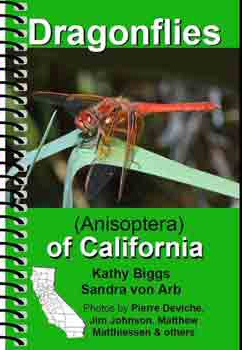
useful in NV, OR & WA too!
by Kathy Biggs & Sandra von Arb
BEAR Foundation
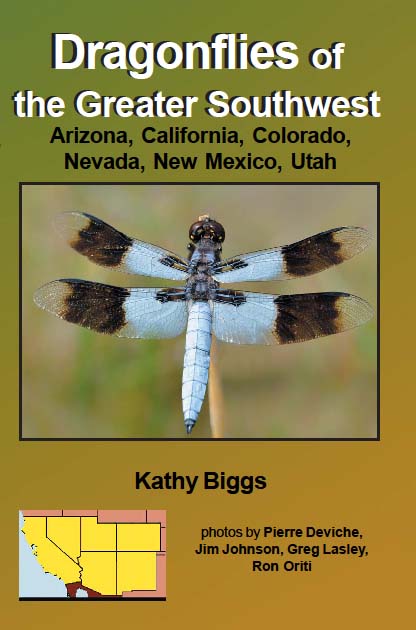
by Kathy Biggs
June 2015
Includes all the species found in California
SORRY OUT OF PRINT
Our revised, updated and expanded dragonfly guide for California:
Common Dragonflies of California
A Beginner's Pocket
Guide, 2009 (replaces out of print 1st & 2nd printings of this title from 2000)
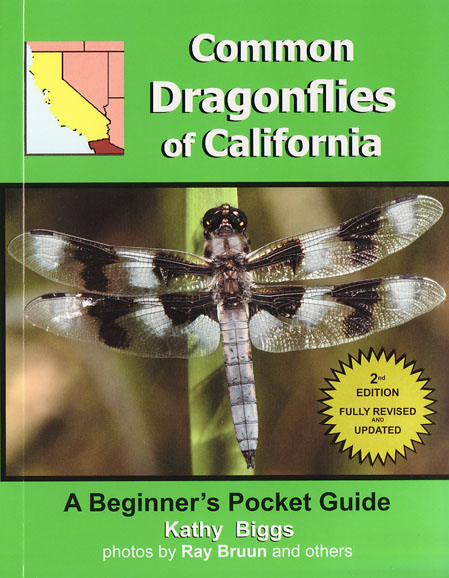
useful in OR and WA too!
by Kathy Biggs
Azalea Creek Publishing
SORRY - OUT OF PRINT
A guide for identifying the dragonflies & damselflies of the greater Southwest
Common Dragonflies of the Southwest
A Beginner's Pocket Guide
2004
Click here for more information
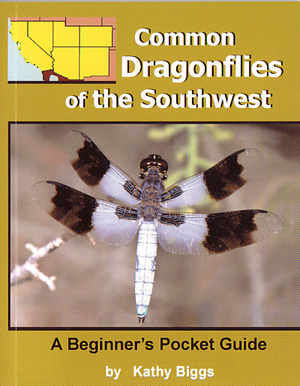
by Kathy Biggs
Azalea Creek Publishing


Click here to read the article An Interview with Kathy Biggs, on Dragonflies, Dragonfly Ponds and how She Became an Author
If you have a pond, would like to make one, are interested in California native plants or wildlife, or just would like to contact us, please do so bigsnest at sonic.net
Click here to go to a page of links to other WILDLIFE ponds
If you have comments or could make contributions of stories, photos or ideas please click here to email me.
| In 1998 this pond site received a "Links2Go Key Resource award" in the Ponds topic!
We proudly display the award, which is presented to "Fewer than one page in one thousand....based on how actual page authors ..... index and organize links on their pages." |

This site is totally privately funded. If you've found it useful, a small donation will help keep it on the web! Thanks, Kathy Biggs
This site was visited 86,336 times between when the counter was put on
it at its first web-host site (August 29, 1998) and when it was
moved to PowWeb on March 25, 2002.
Since it's move, this site is averaging 150 unique
visitors per week by folks interested in ponds.
We thank you for your interest - Kathy Biggs email Kathy

This site was moved to PowWeb because of their very attractive web packages.
They have a nice referral plan.
Click on the PowWeb image above to move your site there! Thanks!!